The South African National Blood Service is a non-profit organisation that provides human blood for transfusion that operates in South Africa, with the exception of the Western Cape, which has its own blood service.
Blood types
Blood is life
From the day that human life is conceived, blood fulfils a life giving and nurturing role. Blood is the fluid of growth, transporting nourishment from digestion and hormones from glands throughout the body. Blood is the fluid of health, transporting disease fighting substances to the tissue and body waste to the kidneys.
Because it contains living cells, blood is alive. Unlike medications that are manufactured, blood cannot be manufactured. Healthy donors are the only source of blood for those who need it.
If it was not for blood donors, life-saving medical treatment for children with life threatening anaemia, trauma victims, women with pregnancy related complications, organ transplants, bone marrow transplants, complicated surgical procedures and cancer treatments would not be possible.
What is your type?
The differences in human blood are due to the presence or absence of certain protein molecules called antigens and antibodies. The antigens are located on the surface of the red blood cells and the antibodies are in the blood plasma. Individuals have different types and combinations of these molecules.
The blood group you belong to depends on what you have inherited from your parents.
To date, more than 20 genetically determined blood group systems exist, but the AB0 and Rh blood group systems are the most important ones used for blood transfusions.
Not all blood groups are compatible with each other. Mixing incompatible blood groups leads to blood clumping, or agglutination, which is dangerous for individuals.
What is the significance of my blood group?
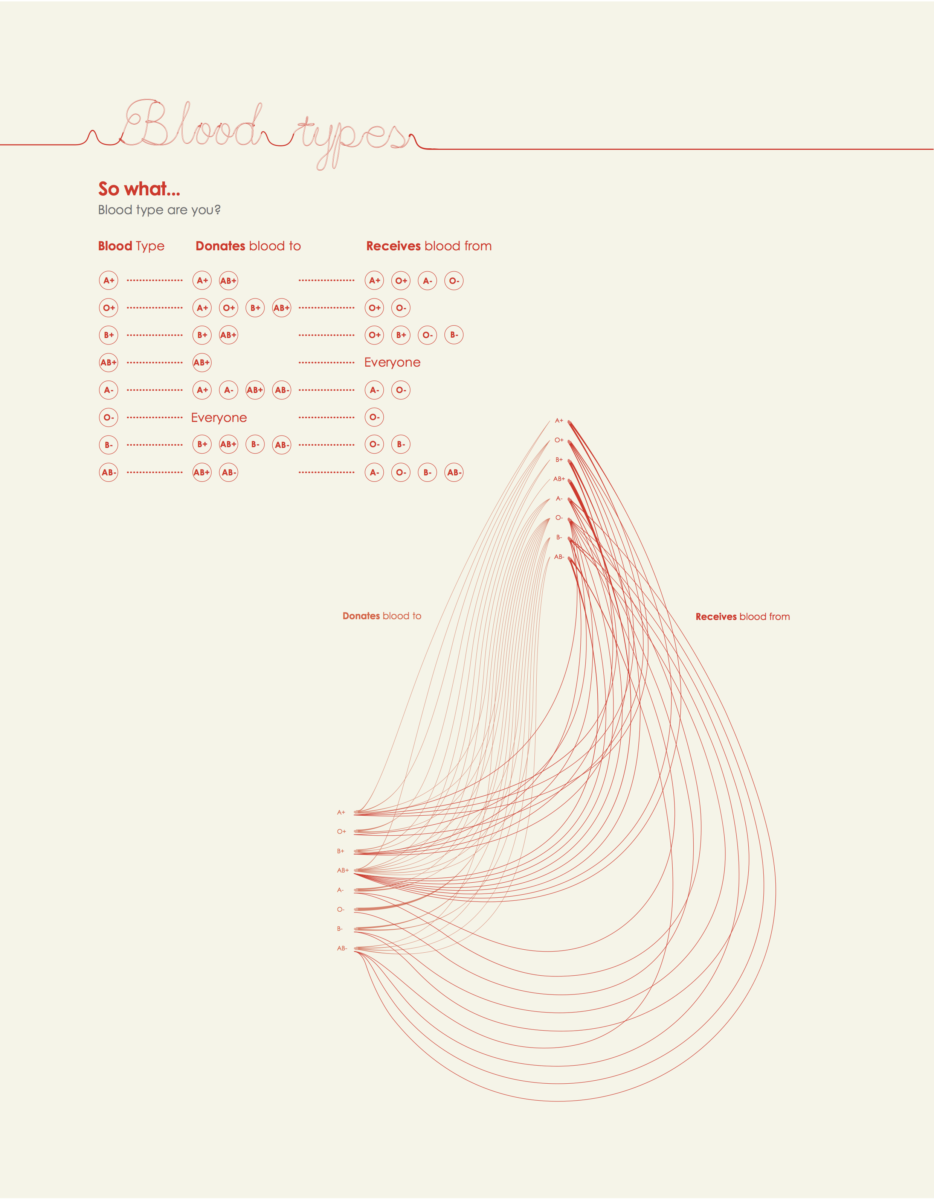
All donors belong to one of four blood groups: A, B, AB or O. You are also classified as either Rh positive or Rh negative. There are therefore eight different main blood groups.
Not all blood groups are compatible with each other and the success of modern transfusion medicine depends on classifying and matching donors and patients correctly.
Group O blood is known as the universal blood type, as it can be given to patients of any blood group.
Rh Factor blood grouping system
Many people also have a so-called Rh factor on the red blood cell surface. This is also an antigen and those who have it are called Rh+. Those who haven’t are called Rh-.
A person with Rh- blood does not have Rh antibodies naturally in the blood plasma (as one can have A or B antibodies, for instance). But a person with Rh- blood can develop Rh antibodies in the blood plasma if he or she receives blood from a person with Rh+ blood, whose Rh antigens can trigger the production of Rh antibodies. A person with Rh+ blood can receive blood from a person with Rh- blood without any problems.
Nobel Laureate Karl Landsteiner was involved in the discovery of both the AB0 and Rh blood groups.
Donation process
Donation process
Donating safe blood means you are committed to participating in a vital community service to improve the quality of life, for patients in need of blood transfusions.
The South African National Blood Service (SANBS) has various measures in place to protect the health and wellbeing of blood donors and patients.
These measures ensure that our blood supply is among the safest in the world.
- You will be required to complete a Donor Questionnaire. The questions are aimed at assessing your health and lifestyle to eliminate any effects that could pose a risk to your health and the health of a recipient.
- This is followed by a one-on-one interview with the nurse who goes through the questions to ensure that the questions are understood and that the donor understands the importance of being honest on the questionnaire.
- Your blood pressure and haemoglobin (iron) levels are checked. (The checking of your iron level is done with a small prick to your finger.)
If you meet this criteria you may continue, if not you will be deferred
When you are comfortable on the chair
- We will need to confirm your name, address and date of birth
- We examine your arm and place a cuff on your arm to maintain a small amount of pressure during donation (this does not measure blood pressure).
- We then examine your arm to find a suitable vein and clean it with an antiseptic sponge.
- We will insert a needle in your arm which will collect your blood into a blood bag with your unique number.
- We only use new, sterile needles which are used once and incinerated thereafter.
- A scale weighs the blood and stops when you have donated 480ml. This usually takes between 5-10 minutes.
- In addition to the blood bag donated, 3 small vials of blood will also be collected. This is what goes through for testing with the unique number that refers back to the blood donated.
You should not feel any discomfort or pain. If you do, tell a member of staff.
The needle will be removed and a sterile dressing applied to your arm. The blood donation process takes about 30 minutes from start to finish.
You are requested to lay down for a few minutes once you have donated.
Remember these tips…
- Increase your fluid intake for four to six hours after donation.
- Avoid strenuous physical exercise or heavy lifting with the arm used for donating for two hours.
- Do not smoke for at least half an hour after donation.
If you feel unwell after making a donation or think you may be coming down with an infection, please contact your donor centre, call our toll free number 0800 119 031 or send an email to customerservice@sanbs.org.za
How often should I donate?
You can donate blood every 56 days and we would like donors to commit to regular blood donation. This means at least four donations during a two-year period. This will assist in ensuring a safe and sufficient blood supply.
Remember – don’t wait, please DONATE!
The universal access to safe blood is the lifeline for the healthcare system of any nation. We can all be proud of the dedicated and selfless South Africans who regularly donate their blood to save the lives of thousands of other people every year.
What can go wrong?
Not much… for the vast majority of people the process of giving blood is a simple, trouble-free and a positive experience. Blood donors can’t wait for their next donation and feel good knowing that they are saving lives.
However, a small number of donors may experience some side effects such as:
- Bruising or a painful arm.
- Dizziness and Fainting
- In some very rare cases nerve and tendon injuries may occur
Keep in mind that this happens in less than 2% of donors. You can be assured that staff is fully trained to recognise and manage all complications related to blood donation.
Another unintentional consequence of donating blood is iron loss which may lead to or aggravate anaemia. While most donors are able to easily replace the iron lost during blood donation, some donors struggle to do so. This is especially true in females of childbearing age as well as vegetarian donors or any donor who follows a low iron diet. Such donors should consider donating less frequently, eating iron rich foods regularly or taking iron supplements.
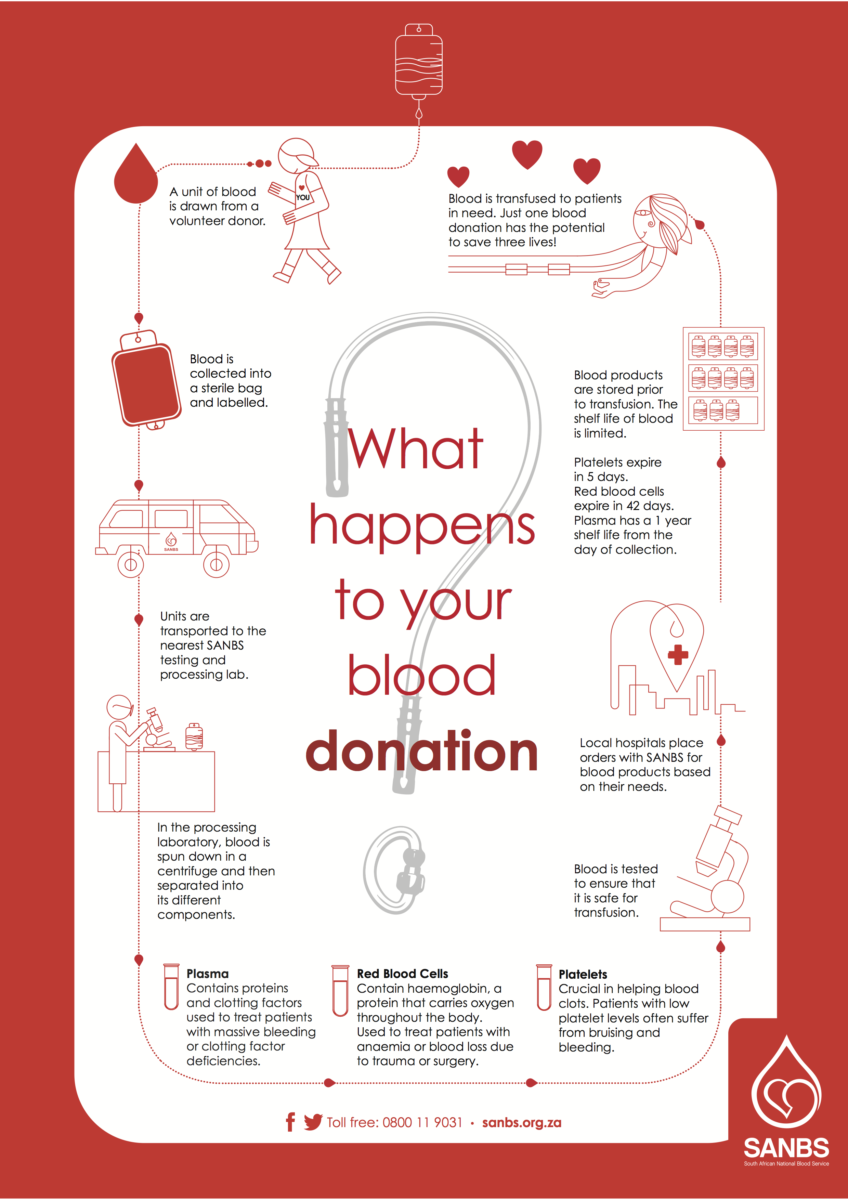
What happens to my blood after donation?
Less than 5% of blood is used as whole blood (the way you donated it). By separating the other 95% into its components; red blood cells, platelets and plasma, the unit you donated can save up to 3 lives. Which is wonderful considering the whole process takes only about 30 minutes. Your platelets can be used for a cancer patient, plasma to replace clotting factors in a trauma patient and your red blood cells for patients who needed surgery or suffered complications during childbirth.
Contact us
South African National Blood Services
1 Constantia Blvd, Roodepoort, 1715
011 761 9000