About 8 percent of people living with psoriasis develop guttate psoriasis. This type of psoriasis often starts at an early age (childhood to young adulthood), although it can start at any age.
What is guttate psoriasis?
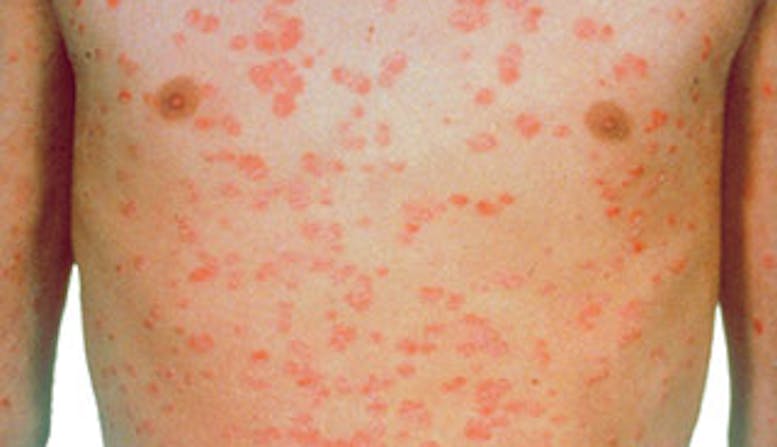
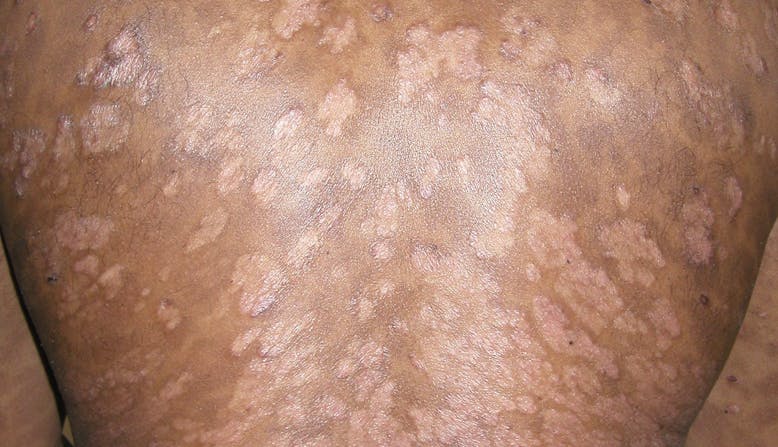
Guttate psoriasis is psoriasis that is characterised by multiple small scaly plaques on the trunk and limbs. ‘Gutta’ is Latin for a drop; guttate psoriasis looks like a shower of red, scaly teardrops that have fallen down on the body.
Who gets guttate psoriasis?
Guttate psoriasis tends to affect children and young adults of both sexes and all races.
What causes guttate psoriasis?
Guttate psoriasis often follows a streptococcal infection of the throat or an upper respiratory tract viral infection. There may be a genetic disposition to psoriasis.
What are the clinical features of guttate psoriasis?
Guttate psoriasis comes on very quickly, and within a few days, small red scaly plaques may spread widely. Occasionally there may be only a few scattered lesions in total.
The psoriasis plaques are usually concentrated around the trunk and upper arms and thighs. Face, ears and scalp are also commonly affected but the lesions may be very faint and quickly disappear in these areas.
Symptoms
Guttate [GUH-tate] psoriasis appears as small, round spots called papules [PAP-yules] that are raised and sometimes scaly. Papules are caused by inflammation in the skin and often appear on the arms, legs and torso. However, you may develop papules on your face, ears and scalp.
Triggers
Guttate psoriasis often develops suddenly. It may start after an infection such as strep throat. Strep throat is caused by an infection of streptococcal [strehp-tuh-KAH-kuhl] bacteria. It is possible to have strep throat without symptoms. Speak with your health care provider about testing for strep throat if you develop guttate psoriasis.
Other common triggers include:
- Certain medicines, such as anti-malarials and beta blockers
- Infections such as the flu, sinus infections or upper respiratory infections
- Streptococcal infection
- Tonsillitis (inflammation of the tonsils)
- Injury to the skin
- Stress
Treatment
Treatment options for guttate psoriasis often include phototherapy or oral treatments. If your guttate psoriasis continues, your health care provider may recommend a biologic or a combination of treatments. You and your health care provider will discuss the best treatment plan for you based on the severity of your symptoms and medical history.