For much of the 20th century, asbestos cement sheets provided builders with a rugged solution for simple roofing and siding projects. While these products were cheap to manufacture and buy, their true cost emerged years later in the form of deadly asbestos-related illnesses.
How Were Asbestos and Cement Sheets Used?
Asbestos cement products, including asbestos cement sheets and pipes, currently make up approximately 90% of the world’s asbestos production. The vast majority is used to make asbestos roofing. While asbestos cement sheet production in the U.S. ended in the 1980s, it remains legal to import the product from other countries.
Fibrous asbestos cement is more durable than drywall and easier to work with than concrete, and it has numerous applications in construction, including use as roofing and siding. Today in the U.S. the fibers in cement sheets are usually made of cellulose, a substance found in plants, but for nearly 80 years they were primarily made with asbestos.
These sheets were installed in homes, military bases, public buildings, industrial settings and job sites. Asbestos cement sheet was once synonymous with “fibrous cement sheet,” and it has also been generically called “AC sheet” and “fibro.” U.S. companies stopped manufacturing these types of asbestos products, but asbestos cement sheets are still popular building materials in developing nations such as India and China. These products are dangerous because with age and damage they become friable, or easily crumbled, making them likely to release asbestos fibers.
Types of Asbestos Cement Sheets
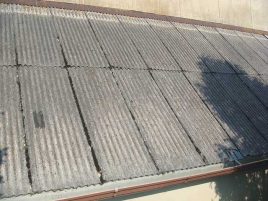
Corrugated Asbestos Sheets
Fibrous cement created an easy and affordable alternative to corrugated metal panels, which offer little insulation and inevitably rust over time. Corrugated asbestos sheets were used in the roofing and siding of all types of buildings, especially in factories and on farms.
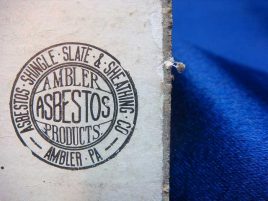
Asbestos Flatsheet
Because fibrous cement is much more water-resistant than drywall, flat sheets of asbestos cement found their way into the interiors of homes and businesses as walls and underlayment for flooring.
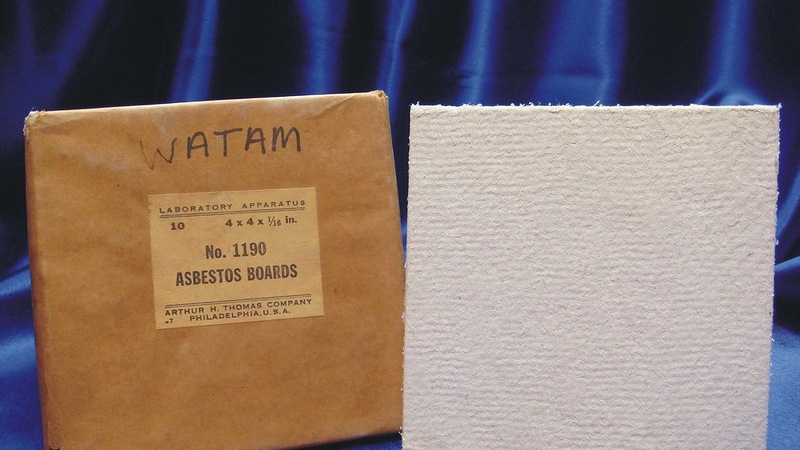
Asbestos Board
Also known as cement wallboard and asbestos millboard, asbestos cement boards were produced in sheets. They were used as a fireproofing material around boilers, heaters and wood stoves. Asbestos board was also used for automobile hood liners and as gaskets and washers in electrical applications.
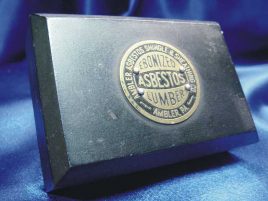
Asbestos Lumber
Also called asbestos cement sheathing, “asbestos lumber” was not made out of wood at all. Instead, it was marketed as a superior alternative to wood. It was fireproof and electrically nonconductive, yet still soft enough to be worked like natural lumber. Asbestos lumber was used as a base for roofing and siding materials such as shingles and false brick facing.
Asbestos products are notoriously difficult to identify visually. The best approach is to have a suspicious product tested. Workers should assume that older corrugated roofs and flatsheets are likely to contain asbestos.
Companies Connected to Asbestos Roofing and Siding Sheets
American brands of asbestos cement sheets include:
| MANUFACTURER | BRAND |
|---|---|
| Celotex | Careycel Insulated Sheathing, Careystone Corrugated Asbestos Cement, Careystone Flat Asbestos Cement |
| Keasby & Mattison Company | Ambler Asbestos Corrugated Sheathing, Ambler Corrugated Roofing and Siding, Century Asbestos Corrugated Roofing |
| GAF Corporation | Panelstone Asbestos Cement Sheeting |
| National Gypsum Company | Gold Bond Corrugated Roofing, Gold Bond Cement Flatsheet |
| Johns Manville | Transite Corrugated Roofing and Siding |
Other companies that manufactured asbestos cement sheets include:
- Asbestone Corporation
- Asbestos Shingle Slate & Sheathing Co.
- Atlas Asbestos Company
- Baldwin-Ehret-Hill
- CertainTeed Corporation
- Durabla Manufacturing Company
- Eagle-Picher
- Eternit
- Flintkote Company
- Garlock, Inc.
- James Hardie Industries
- Philip Carey Manufacturing Corporation
- U.S. Gypsum
Diseases Asbestos Cement Sheets Can Cause
Manufacturing and working with asbestos cement sheets may lead to asbestos exposure. A 2009 study conducted in Thailand, where the use of asbestos cement sheets is common, found that roof fitting polishers endured the highest levels of asbestos exposure while working with asbestos cement sheets. Workers involved in the manufacturing of asbestos cement sheets also experienced high exposure handling bags of raw asbestos fiber.
Exposure to asbestos from cement sheets is known to cause asbestos-related diseases such as:
- Mesothelioma
- Lung cancer
- Ovarian cancer
- Laryngeal cancer
- Asbestosis
- Benign pleural conditions, including pleural plaques and pleuritis
If you formerly worked with asbestos cement sheets you should monitor your health for signs of respiratory or gastrointestinal disease, including difficulty breathing and abdominal distension. Anyone diagnosed with an asbestos-related disease should seek the opinion of a specialist to access innovative treatments.
People at risk of exposure from asbestos sheets include:
- Construction workers
- Demolition crews
- Electricians
- Factory workers who manufactured the products
- Military personnel
- Do-it-yourself renovators